A. First meiotic division or Heterotypic division (Meiosis I)
During 1st meiotic division, diploid cell is divided into two haploid cells.
The daughter cells resulting from this division are different from the parent cell in chromosome number.
Hence this division is also called heterotypic division.
It consists of the phases like prophase-I, metaphase-I, anaphase-I, telophase-I and cytokinesis-I
Prophase-I :
This phase has longer duration.
Significant features which are peculiar to meiosis occurs in this phase.
This phase can be sub-divided into five sub-stages as
- Leptotene,
- Zygotene,
- Pachytene,
- Diplotene
- Diakinesis.
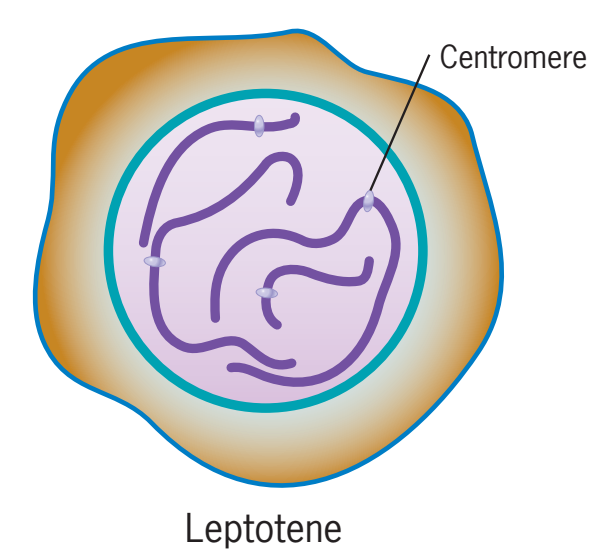
1. Leptotene :
The volume of nucleus increases.
The chromosomes become distinct, long thread-like and coiled.
They take up a specific orientation- the 'bouquet stage' inside the nucleus.
This is characterised with the ends of chromosomes converged towards that side of the nucleus where the centrosome lies.
The centriole divides into two and migrate to opposite poles.
2. Zygotene :
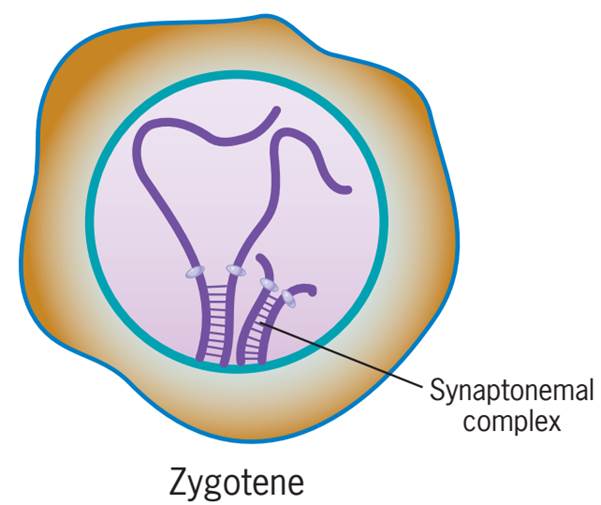
Intimate pairing of non-sister chromatids of homologous chromosomes takes place by formation of synaptonemal complex.
This pairing is called synapsis.
Each pair consists of a maternal chromosome and a paternal chromosome.
Chromosomal pairs are called bivalents or tetrads.
3. Pachytene :
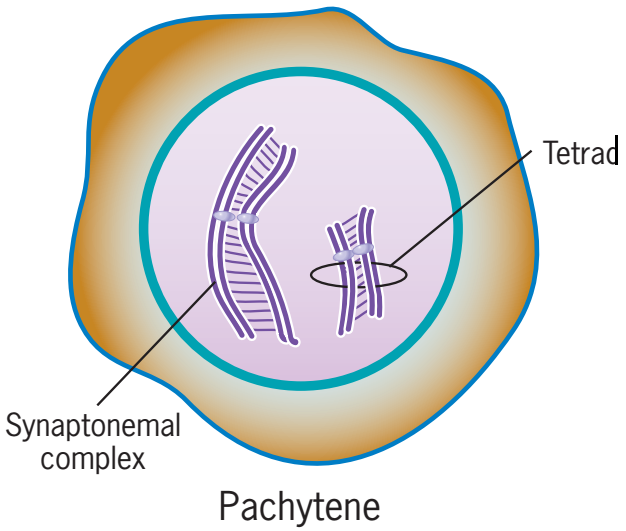
Each individual chromosome begins to split longitudinally into two similar chromatids.
At this stage, tetrads become more clear in appearance because of presence of four visible chromatids.
The homologous chromosomes of each pair begin to separate from each other.
However, they do not completely separate but remain attached together at one or more points.
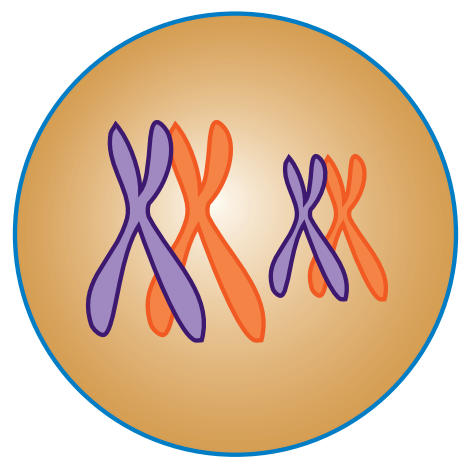
These points appear like a cross (X) known as chiasmata.
Chromatids break at these points and broken segments are exchanged between non-sister chromatids of homologous chromosomes.
This is called as crossing-over or recombination.
4. Diplotene :
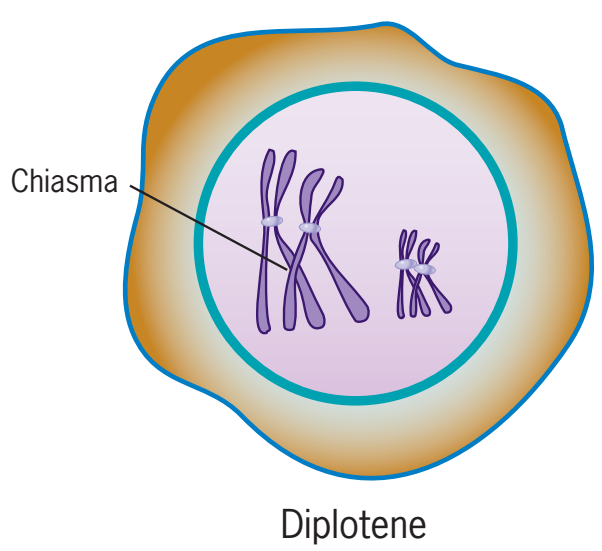
Though chiasmata are formed in pachytene, they become clearly visible in diplotene due to the beginning of repulsion between synapsed homologous chromosomes.
This is called desynapsis.
It involves disappearence of synaptonemal complex.
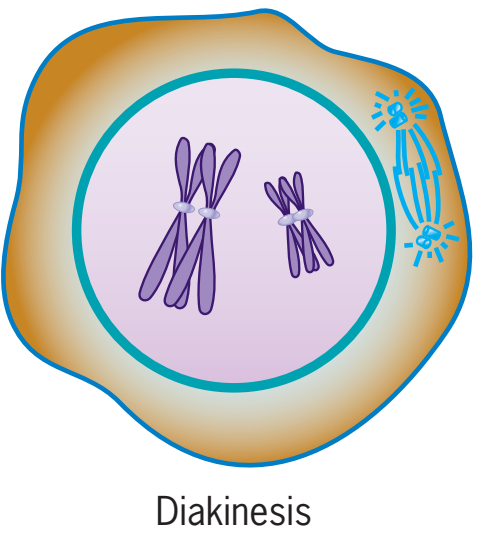
5. Diakinesis :
In this phase, the chiasmata beings to move along the length of chromosomes from the centromere towards the ends of chromosomes.
The displacement of chiasmata is termed as terminalization.
The terminal chiasmata exist till the metaphase.
The nucleolus disappears and the nuclear membrane also begins to disappear.
Spindle fibres starts to appear in the cytoplasm.
Metaphase-I :
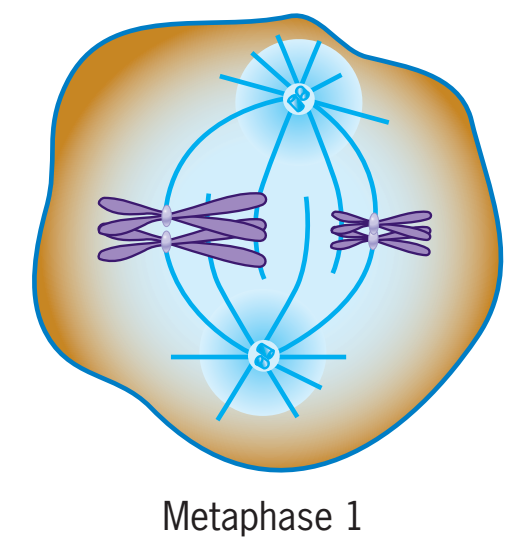
The spindle fibres become well developed.
The tetrads move towards the equator.
They orient themselves on the equator in such a way that centromeres of homologous tetrads lie towards the poles and arms towards the equator.
Due to increasing repulsive forces between homologous chromosomes, they are ready to separate from each other.
Anaphase-I :
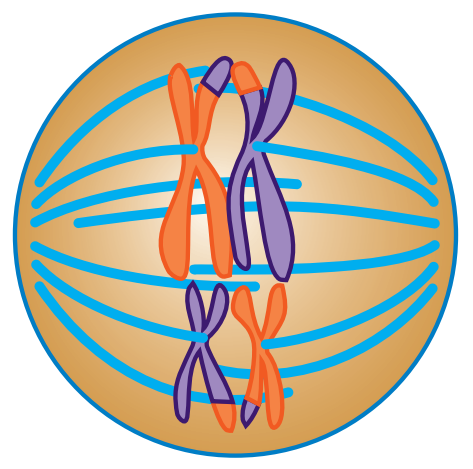
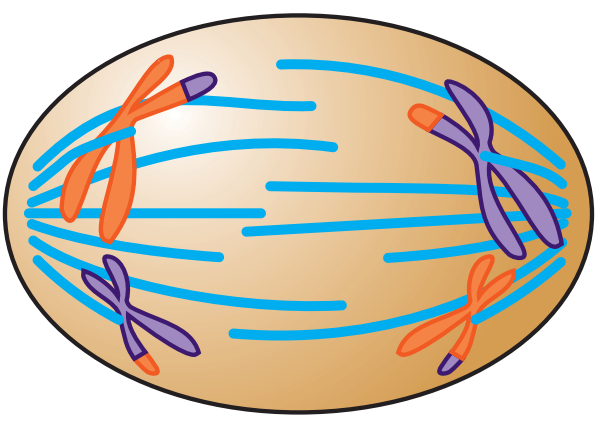
In this phase, homologous chromosomes are pulled away from each other and carried towards opposite poles by spindle apparatus. This is disjunction.
The two sister chromatids of each chromosome do not separate in meiosis-I.
This is reductional division.
The sister chromatids of each chromosome are connected by a common centromere.
Both sister chromatids of each chromosome are now different in terms of genetic content as one of them has undergone the recombination.
Telophase-I :
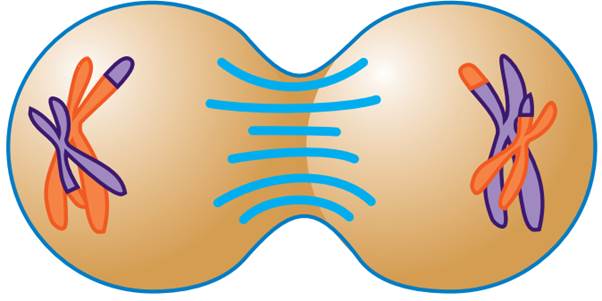
The haploid number of chromosomes after reaching their respective poles, become uncoiled and elongated.
The nuclear membrane and the nucleolus reappear and thus two daughter nuclei are formed.
Cytokinesis-I :
After the karyokinesis, cytokinesis occurs and two haploid cells are formed.
Interphase or interkinesis
In many cases, these daughter cells pass through a short resting phase or interphase / interkinesis.
In some cases, the changes of the telophase may not occur.
The anaphase directly leads to the prophase of meiosis II.
